
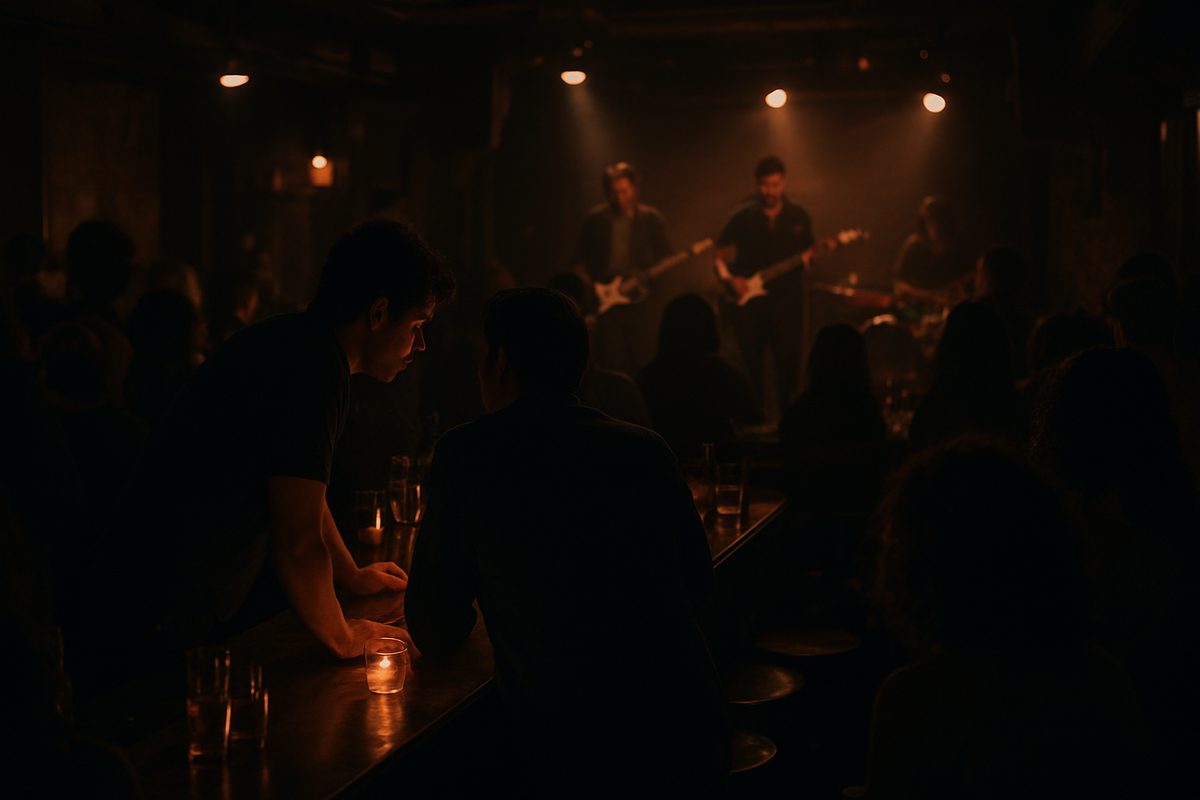
A live room can go from manageable to overwhelming in the space of one song. The band turns up, the crowd pushes in, and the bar top becomes a wall of bodies. On music nights, every order is a small negotiation between a guest, a bartender, a point-of-sale screen, and the room itself. Bar noise taking orders is not a single fix. It is a system problem that hits at the rail, at the terminal, and in the pass between the well and the floor. The changes that reduce errors are practical, low cost at first, and built for the way a loud room actually behaves.
Why Bar Noise Breaks the Order Path
In a quiet bar, taking an order is a straight line. The guest speaks, the bartender hears the full sentence, repeats it, and enters it. In a music venue, that line breaks in several places at once. Low-frequency sound from the stage masks the middle of words. Cymbal wash and crowd noise bury consonants. A request for a lager, a margarita, and a Manhattan can arrive at the bartender as three syllables and a guess. Under load, the guess becomes a mistake. A wrong build, a wasted pour, a comp, or a frustrated regular. The room does not just slow service. It changes how information moves.
The key is to stop treating this as a hearing problem. It is a signal path problem. The order has to travel from the guest to the bartender, then from the bartender to the POS, then from the POS to the service well. Every step in that path can be hardened. The fixes that work are the ones that shorten the path, reduce what the bartender has to hold in memory, and remove the need to understand full sentences in a loud room.

First Fixes: Position, Surfaces, and the Bar Top
Start with where the bartender stands and where the guest leans in. In many small venues, the service well is placed directly under a house speaker or next to a stage monitor. That single position can cost more accuracy than any amount of shouting. If the well cannot move, change the angle. A slight turn of the body can use the bartender’s shoulder to block one side of the room. A small acoustic panel or even a dense curtain hung between the well and the nearest loudspeaker can reduce the wash enough to hear consonants. This is often a low-cost change compared with moving speakers or rebuilding the bar.
Work the Quietest Line of Sight
Teach bartenders to take the guest’s order from the side, not face on. When both people face each other straight on, the bartender gets the full force of the room behind the guest. When the bartender turns one ear toward the guest and shields the other, the brain gets a cleaner signal. The guest also reads the bartender’s mouth and gestures more easily. This costs nothing. On a loud night, position the order taker so the stage is behind the guest, not behind the bartender.
Treat the Hard Surfaces Around the Point of Sale
Bar tops, back bars, glass racks, and low ceilings all reflect sound. A guest’s voice bounces off the bar top and arrives mixed with the room. Hard surfaces near the order point make it worse. Heavy rubber bar matting, dampened service trays, and cork or dense foam pads under glass racks take the edge off those reflections. Fabric panels behind the back bar can help more than most owners expect. They do not need to cover the whole wall. A treated band at head height behind the terminal and the well is enough to change the character of the sound. Use materials rated for commercial spaces and keep them away from open flame and heat.
Standardize the Order Script
In a loud room, the worst thing a bartender can do is ask an open question like what can I get you and then try to parse a long answer. The guest will list drinks, modifiers, brands, names, and maybe a story about the band. Instead, train the team to control the conversation. The order taker sets the rhythm with short, same-order prompts. The guest fills the blanks. This works because it reduces each exchange to a small set of known fields.
Cut the Order to Four Fields
Use a consistent order: drink, count, modifier, tab name. For example, the bartender asks for the drink first. The guest says a margarita. The bartender holds up two fingers or says number. The guest says two. The bartender asks for the modifier. The guest says no salt, one with salt. The bartender asks for the tab. The guest says a first name or a card. That is four short answers, not one long sentence. The guest can point, nod, and use fingers. The bartender never has to hold a full sentence in memory.
Repeat back by category, not as a full sentence. Two margaritas, one no salt, tab Sarah is much easier to confirm than a wall of words. If the guest corrects one field, only that field changes. The rest of the ticket stays locked.
- Drink and base spirit
- Count and glass
- Modifiers and allergies
- Tab name, card, or seat number
Build a Low-Light, High-Noise POS Setup
The point-of-sale screen is where many loud-room errors get locked in. In a dark music venue, a bright, cluttered screen makes a bartender squint, scroll, and hunt for buttons. The fix is not a faster bartender. The fix is a screen that can be read in one glance. Increase the font size, reduce the number of buttons on the main page, and use high-contrast color coding. Put the top 30 drinks for music nights on the first screen. Move modifiers to a second screen only when needed. A bartender should be able to ring a common order without looking away from the guest for more than a second.
Handheld POS devices can help, but they fail in high-density rooms. A bartender working a packed rail may not have a free hand to carry a device through a wet bar top. If you use handhelds, give them a fixed home at the well on a charging dock or a tether. If you use a fixed terminal, keep a physical bump bar or large keypad where the bartender can hit common functions by feel. In either case, keep a paper backup. A blank order pad and a sharpie still work when a screen freezes, a battery dies, or a drink spills across the terminal at 11:30 p.m.

Run the Bar as a Signal System
When the band is at full volume, spoken language is the least reliable tool on the floor. The strongest venues run a second language of hand signals, head nods, and bar positions. This is not about memorizing a national standard. It is about building a small set of signals the team agrees on before the shift. A tap on the left shoulder means the service well needs ice. A flat hand moved across the rail means the guest is cut off. Two fingers pointed at a bottle means the well calls for that bottle. The exact meaning matters less than consistency.
Position Roles by Zone
On loud nights, do not let one bartender bounce between the well, the rail, and the stock room. Split the work into fixed zones. One person works the rail and takes orders. One person builds drinks at the well. One person runs glassware, ice, and backups. When roles are fixed, each person only has to hear the sounds that matter to their zone. The order taker can lean into the guest. The well can read the tickets. The runner does not need to hear the guest at all. This is more efficient and it reduces the number of people trying to shout over the band.
Use Silent Hand Signals for Common Orders
Hand signals work best for the top 20 drinks in the house. A raised finger for a single, two for a double, a thumb toward the tap wall for a beer, a pinkie for a taster, a closed fist for water. The team can build these in a rehearsal. Print them on a small card at the well if you need to. The important part is that the guest never has to learn them. The bartender reads the guest’s spoken order, then converts it to a signal for the well. The well reads the signal and builds without asking the guest to repeat the order.
Train for Noise Before the Show
Noise training is not a lecture. It is a set of short drills done before doors open. The goal is to make the team comfortable with partial hearing. Play a live recording of a band at room volume through the PA while a staff member stands at the rail and runs mock orders. Do this for ten minutes before a shift. The bartender practices the four-field script, the repeat-back, and the signal to the well. The POS operator practices ringing under distracted conditions. This is not about simulating a perfect room. It is about making mistakes cheap.
Run the drill with the house music loud enough to cause strain, but not so loud that it damages hearing. The team should wear hearing protection during the drill. Musician-style earplugs with flat attenuation work well because they cut volume without muffling the midrange. If the staff cannot hear a mock order, they will not hear a real one at midnight. Use that as feedback. Change the bar position, the script, or the surface treatment until the drill works.
Build a Shift Debrief Habit
After the show, take five minutes to review the loudest hour. Which tickets rang wrong? Which rail position had the most repeats? Which drinks were comped? Do not use the debrief to blame. Use it to adjust the system. Write the three worst noise problems on a whiteboard behind the bar. Try one change before the next loud night. This turns noisy shifts into a testing loop.
Common Mistakes That Make Bar Noise Taking Orders Worse
Most bad nights follow a small set of patterns. These are the recurring failures that turn a loud room into a losing shift.
- Relying on a louder voice. Shouting raises the room’s noise floor and tires the bartender’s voice.
- Placing the service well under a speaker or monitor because the plumbing was already there.
- Using a POS screen with tiny buttons and a cluttered menu during peak noise.
- Asking open-ended questions and then guessing at long answers.
- Keeping glassware and metal trays on bare hard surfaces next to the order point.
- Rotating staff across roles every few minutes so no one learns the hand signals.
- Ignoring hearing protection on music nights.
- Failing to repeat back by category and then ringing a wrong tab.
A Pre-Service Checklist for Loud Nights
Before the first band goes on, walk the bar with this list. It takes less than ten minutes and it catches the problems that turn a loud room into a losing shift.
- Move the order point away from the nearest speaker or shield it with a panel or curtain.
- Put dampening pads under glass racks and trays near the service well.
- Set the POS to the music-night menu with large buttons and top sellers in one view.
- Stock blank order pads and sharpies at each rail position.
- Confirm the hand signals for water, single, double, beer, cut off, and well backup.
- Fit earplugs for the rail and well staff.
- Run one five-minute mock order drill with the PA playing a live set at room volume.
- Agree on one debrief note at the end of the night.